
Table of Contents
ToggleLeague of Legends has been grinding through the Rift for nearly 15 years, and in that time, it’s accumulated a mountain of lore, legendary moments, and game mechanics that define modern gaming. Whether you’re a casual player crushing normals or a competitive grinder obsessed with climbing, there’s always something about League you probably didn’t know. The game’s evolution spans from Riot Games’ bold 2009 launch to 2026’s increasingly complex meta, world-altering cinematic universe, and a competitive scene that’s birthed franchises and global esports dynasties. If you want to truly understand League, not just how to play it, but why it matters in gaming culture, you need more than mechanics guides and patch notes. You need the deep cuts: the abandoned champions, the patch that broke everything, the stories woven into skins, and the moments that made esports fans lose their minds. This trivia deep-dive isn’t filler: it’s the kind of knowledge that separates veterans from everyone else.
Key Takeaways
- League of Legends trivia reveals how massive systems overhauls like Rune Reforged (2017) and the Mythic item system (2021) fundamentally reshaped gameplay and democratized access for new players.
- Faker remains the undisputed esports GOAT with four Worlds titles and 13+ years of dominance, while champions like Theshy revolutionized their lanes and players like Jensen proved Western longevity in competitive League.
- Runeterra’s lore spans deeply interconnected regions—Noxus vs. Demacia, Piltover vs. Zaun, and Shurima’s god-like Ascension—creating sophisticated champion backstories that go far beyond typical MOBA narratives.
- Arcane’s Emmy-winning Netflix series and cosmetic universes like K/DA transformed League from a game into a multimedia cultural phenomenon with global influence on esports infrastructure and streaming culture.
- Map design evolution, from the visual overhaul in Season 4 to jungle spawn time changes in 2024, and objective systems like Dragon Souls prove that seemingly small tweaks can entirely rewrite competitive strategy.
- Forgotten champions regularly receive complete reworks—from Mordekaiser and Poppy to Ryze’s six full redesigns—demonstrating Riot’s willingness to rebuild underperforming kits rather than leave them stagnant.
The Origins and Evolution of League of Legends
Early Development and Riot Games’ Vision
League of Legends launched on October 27, 2009, as Riot Games’ answer to the mod-based MOBA boom that dominated the late 2000s. The game didn’t invent the genre, Defense of the Ancients (DotA) held that crown, but Riot deliberately designed League to be more accessible, faster, and friendlier to new players than its grittier competitor.
Riot’s founding vision prioritized character clarity and skill expression over raw mechanical complexity. Champions were meant to be distinctive, each with instantly recognizable abilities. The first roster shipped with 40 champions: by 2026, that’s ballooned to nearly 170 unique characters. That’s not padding, it’s decades of deliberate champion design philosophy evolving alongside player expectations and meta shifts.
The original map was the only map for years. Twisted Treeline and Crystal Scar came later, but Summoner’s Rift has always been League’s soul. Early seasons (Season 1, launched 2011) featured a drastically different game: no ban phase, no jungle camps at the game start, and vastly simpler itemization. Watching Season 1 gameplay footage now feels almost quaint compared to modern 2026 play.
Riot’s 50-man development team in 2009 has exploded into one of the largest gaming studios globally. The scope creep into cinematics, esports infrastructure, and the broader Runeterra IP universe reflects how League stopped being “just a game” and became a multimedia franchise.
Major Patch Updates and Game-Changing Mechanics
League’s gameplay has been completely rebuilt several times through massive systems overhauls. Patch 5.0 (January 2015) introduced the Juggernaut class update and reworked items like Black Cleaver, fundamentally shifting how teamfights played out. Suddenly, tanky slayers like Darius and Mordekaiser became terror picks instead of niche picks.
The Rune Reforged update (Patch 7.22, October 2017) nuked the old rune and masteries system entirely. Instead of grinding IP to buy runes, players got free access to Rune trees like Precision, Domination, and Sorcery. This democratized champion flexibility and made climbing viable for new accounts in ways that were previously locked behind hundreds of hours of grinding.
Itemization has seen constant tweaks. The ADC item overhaul in 2021 (Patch 11.1) created Mythic items, fundamentally changing how roles prioritize their first purchase. Galeforce, Kraken Slayer, and Imperial Mandate weren’t just new items, they were role-defining. ADCs who built Galeforce got mobility: those who picked Kraken got pure DPS. These decisions cascaded into entire meta shifts across regions.
Patch 12.10 (June 2022) was the infamous durability patch. For years, League had become a one-shot festival where AP burst and AD crit damage could delete champions in a single rotation. Riot added raw health to champions and adjusted damage formulae. Suddenly, defensive items felt viable, teamfights lasted longer than two seconds, and playmaking became about positioning and resource management, not just spell rotation pacing.
Each of these changes didn’t just tweak numbers, they rewrote the fundamental game state that players had to master. That’s why old guides become instantly obsolete and why pros have to re-adapt fundamentals year after year.
Champion Lore and Hidden Backstories
Legendary Character Connections Across Regions
Runeterra’s lore isn’t random flavor text. It’s a deeply interconnected web spanning six major regions: Noxus, Demacia, Piltover, Zaun, Ionia, and Shurima (plus Targon, Bilgewater, and others). Champions aren’t isolated characters: they’re embedded in regional politics, warfare, and personal vendettas.
The Noxus vs. Demacia conflict is League’s central geopolitical tension. Garen and Darius are mirror champions on opposite sides of this eternal war. But go deeper: Lux and Sylas have a history. Lux is noble-born, sheltered by Demacian privilege, while League of Legends Sylas: is a mage stripped of freedom in Demacia’s magic-suppressing regime. Their cinematics and voicelines hint at broken trust and ideological opposing forces, not just “good vs. bad.” That’s sophistication most MOBAs never attempted.
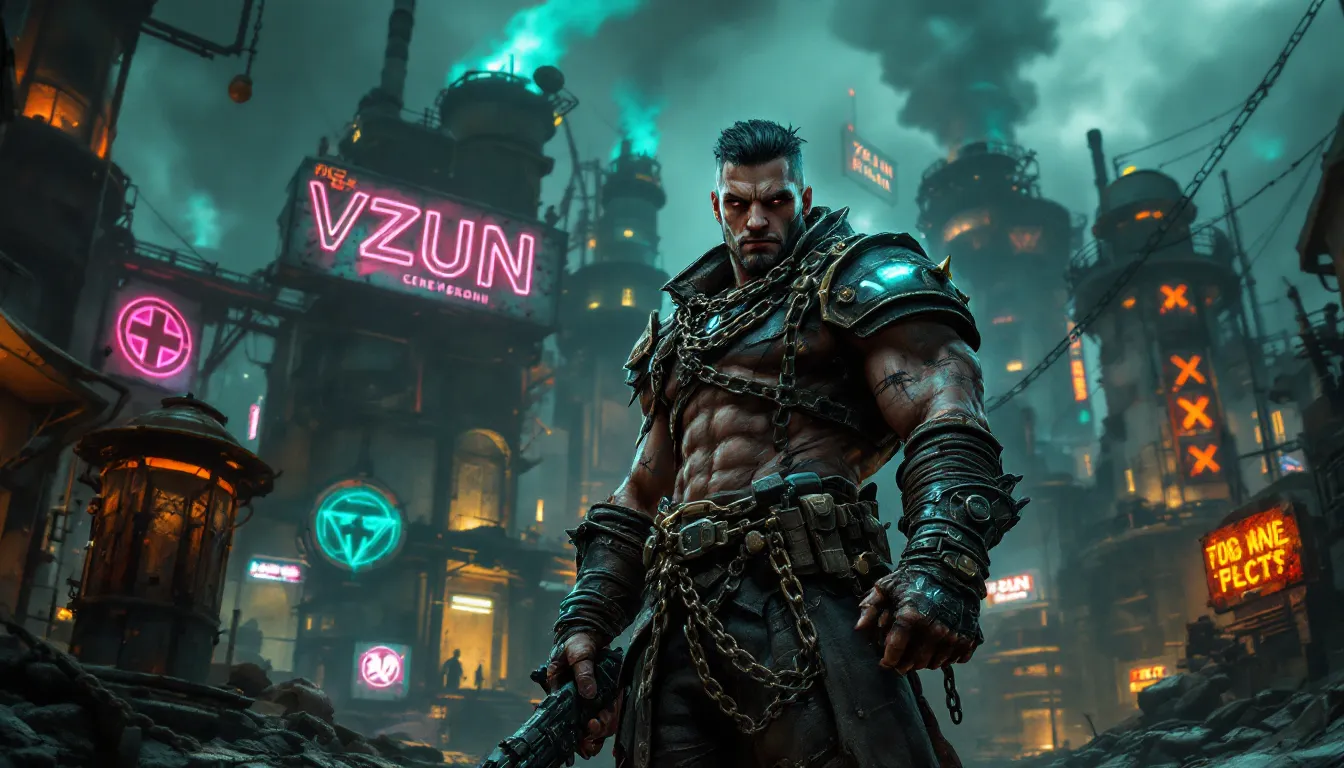
Piltover and Zaun are a sister-city pairing with radically different philosophies. Piltover represents industrial progress, order, and innovation: League of Legends Zaun: is chaos, chemical experimentation, and scrappy survival. Caitlyn hunts criminals across Zaun’s borders: Jinx builds weapons and wreaks havoc. But hextech technology, the foundation of Piltover’s wealth, was stolen from somewhere. The story goes deeper than champion voicelines.
Shurima’s lore underwent a complete revitalization around 2016 when Riot re-released Azir and added champions like Taliyah and Kled. Shurima wasn’t just “desert empire.” It was a once-glorious civilization destroyed by hubris, where ascension is a literal god-tier transformation and the politics involve sun-based immortality. Champions like Xerath and Nasus have thousands of years of history wrapped into their kits.
The Darkin are a legendary force in Runeterra’s lore, ancient, god-like beings imprisoned in weapons. League of Legends Darkin: spans multiple champions (Aatrox, Rhaast as Kayn’s shadow form, and implications for others). Their existence rewrites how players understand the world’s cosmology.
Forgotten Champions and Rework Surprises
Not every champion has aged gracefully. Some were so fundamentally broken or unpopular that Riot completely rebuilt them from the ground up. Mordekaiser received full reworks in 2019, turning him from a busted, gimmicky character into a viable duelist with actual counterplay. His entire passive and ultimate were redefined.
Poppy got a complete visual and gameplay update in 2015. Old Poppy was a point-and-click stun machine with minimal skill expression: new Poppy became a tanky bruiser with gated abilities and engaging mechanics. The old kit was so braindead that it remains a punchline in the community.
Sion’s rework (2014) turned him from an AP bruiser into a full AD tank with a channeled ultimate that makes him a bowling ball of death. Champions aren’t sacred: if a kit isn’t working, Riot doesn’t fear the redesign.
There are also champions that technically exist but feel forgotten. Urgot, for years, was played by maybe 200 people globally. His 2017 rework finally made him a lane bully with identity, jumping him from near-zero pick rate to a competitive staple. Galio had a similar journey, reworked in 2017, he went from a niche counter-pick to a top-lane and mid-lane threat in competitive League.
The wildest surprise? Ryze has been reworked more times than any other champion, six full reworks since 2009, each fundamentally changing how he works. Riot isn’t afraid to say “this isn’t working” and start over. That’s uniquely League.
Esports Legacy and Competitive Milestones
Unforgettable World Championship Moments
League esports didn’t exist until 2011. Now, Worlds is the second-largest esports event globally (behind only The International for Dota 2 by prize pool). The journey from the first Worlds in Season 1 (Sweden, 2011) to 2025’s event showcases how the competitive landscape evolved.
Season 1 Worlds was a scrappy, low-production affair. Teams from North America and Europe didn’t even attend, Fnatic made the only European appearance. Miraculously, Korean team Azubu Frost almost won with a 2-3-2 map visibility exploit that became infamous. It wasn’t the cleanest competitive moment, but it was authentic.
Season 2 Worlds (2012) proved that Korean teams weren’t a fluke. Azubu Blaze and Frost dominated, and suddenly everyone realized Korea’s practice infrastructure and work ethic were light-years ahead. This shaped esports for a decade.
Season 5 Worlds (2015) gave us the Fnatic vs. SKT T1 finals, a brutal 3-1 that introduced the world to Faker’s dominance and cemented Korea’s esports hegemony. But the narrative shifted in Season 6.
Season 6 Worlds saw EU’s Fnatic and NA’s Immortals make unexpected deep runs. Then came the finals: SKT T1 vs. Samsung Galaxy. SKT won 3-2 with Faker on Ryze in the final game. It’s remembered as one of the greatest finals ever played from a macro and micro perspective. But 2016’s real shock came during the tournament itself: ROX Tigers’ Smeb almost single-handedly defeated SKT in the quarterfinals in a 3-2 thriller.
Season 9 Worlds saw China’s FunPlus Phoenix defeat EU’s G2 Esports 3-0 in a blowout final, marking the moment China’s LPL region became the strongest league globally. By 2020-2025, Chinese teams (DRX, T1, JDG) consistently made deep Worlds runs and finals.
Recent Worlds tournaments (2023-2025) have seen meta-defining moments: T1’s redemption arc with a new generation of players, the rise of LEC representatives like Fnatic and G2 finding form again, and the emergence of VCS (Vietnam) as a dark horse region. Each year rewrites expectations.
You can follow live tournament schedules and standings at LoL Esports, which provides real-time coverage across regional leagues and international events.
Player Records and Hall of Fame Achievements
Faker (Lee Sang-hyeok) is the undisputed GOAT. Four Worlds titles (2013, 2015, 2016, 2017), three-time MVP, played at the highest level for 13+ years. No other player has his trophy count or longevity. By 2026, he’s still competing at a champion-level even though being in his late 20s, an age where most esports careers have ended.
Deft (Im Seong-jin) is the greatest ADC to ever touch League. His mechanical consistency and champion pool are unparalleled. He’s played in Korea, China, and on T1, adapting to every meta and region without drop-off. His World Championship record is excellent, though fewer titles than Faker.
Theshy (Han Seung-ho) revolutionized top lane play in 2019 with aggressive, mechanical mastery that rewrote how the role was played. IG’s 2019 championship run featured him at peak performance.
Jensen (Jacob Toft-Andersen) has the longest career of any Western mid-laner, spanning from Season 3 to 2026. He’s played at every international event and remained competitive across multiple meta shifts, a rarity in esports.
MongHyeong (Park Mong-hyeong, Cloud9’s jungler) at one point had the highest Elo ranking on the ladder in 2023, proving that SoloQ dominance sometimes translates to pro success.
Capital Punishment reached #1 on the Korean server, and Knoife has held multiple regional top-10 placements, achievements that don’t require pro contracts but demonstrate elite-level skill. These players are often mentioned across competitive circles at Dot Esports and other esports publications.
Records that persist: Most Worlds appearances (Faker, Kkoma, other old guard), highest KDA in professional play, fastest game win (Afreeca’s 15-minute stomp in 2020), and highest damage per minute in a single Worlds run. These metrics define career trajectories.
Game Mechanics and System Deep Dives
Map Design Evolution and Objective Changes
Summoner’s Rift launched in 2009 with a relatively simple design: two lanes (top and bottom), one jungle, and three turrets per side before the nexus. Over 15 years, Riot has made incremental, then radical, changes.
Early changes (2010-2011) were mostly balance tweaks: buff camp locations, turret ranges, minion wave timing. Season 2 introduced the map-wide clock system and more defined jungle camps. The actual geometry of Summoner’s Rift remained largely unchanged until a major visual update in Season 4 (2014).
That visual update kept gameplay intact but completely rebuilt the map’s aesthetic. The jungle routes felt fresher, lane positioning changed slightly, and ward spots evolved. Players didn’t realize how much the visual change altered gameplay until pro matches felt different.
Then came Preseason 2024’s most aggressive change: the jungle spawn time offset. Krugs, Raptors, and Wolves now respawn 5 seconds after being killed, a seemingly tiny tweak that fundamentally altered jungle pathing, gank timing, and pressure timing. Junglers couldn’t exploit the same predictable clear routes anymore.
Dragon spawn times and Elder Dragon mechanics have shifted repeatedly. Early League didn’t have an Elder Dragon: it was added in Patch 3.8 (2013). The dragon soul system (Patch 9.2, 2019) made every fourth dragon killed grant a permanent, region-wide effect: Inferno grants attack damage and ability power, Ocean grants regeneration, Cloud grants movement speed, and Mountain grants durability. This single change made securing dragons a wincon, not just a gold advantage.
Barons and their impact have been hotly debated. Originally, Baron Nashor was just 300 gold and some buffs. Now, Baron empowers minions, grants siege pressure, and is a major teamfight magnet. Games have been decided entirely by single Baron executions at crucial moments.
Vision mechanics shifted dramatically with the Preseason 2013 trinket system and especially with the Season 4 Vision Control update. Ward limits, trinket upgrades, and Farsight Alteration turned support vision into a high-skill discipline. By 2026, map control IS vision control.
Items, Runes, and Meta-Defining Systems
Runes went through seismic shifts. The old Rune system (pre-2017) required IP farming to buy runes, a massive time gate that punished new players. Players had to grind hundreds of hours to access viable rune pages. The Rune Reforged update (Patch 7.22) flipped this: everyone had access to the same trees, but choosing the right rune setup became a skill expression point.
Modern rune trees (Precision, Domination, Sorcery, Resolve, Inspiration) aren’t just flavor. They define champion identity. A champion’s rune choices determine whether they scale, trade, or survive early game. Picking the wrong secondary tree can cripple a champion: picking the perfect setup can unlock hidden potential.
The Mythic item system (Patch 11.1, January 2021) divided items into tiers: Mythic (one per champion per game), Legendary (5+ allowed), and basic items. This solved an old problem, too much item flexibility meant no “right” builds existed. Now, every champion has 2-4 viable Mythics that define their itemization path. Building Liandry’s Torment on Zyra is fundamentally different from building Luden’s Tempest, one scales health, one scales mana and flat damage.
Adaptive damage, true damage, and crit are constantly balanced. When crit was overtuned in 2020-2021, ADCs broke the game. Riot nerfed crit items, then buffed them again. When AP bruisers (Mordekaiser, Sylas, Maokai AP) became too dominant, Riot adjusted Liandry’s and Demonic Embrace. The balance is a constant arms race.
Hextech items (Protobelt, Rocketbelt, Stridebreaker) added mobility creep that had to be managed. Stridebreaker especially warped melee itemization because suddenly every melee champion could build it for dashes. This led to champions like Tahm Kench and Illaoi building it as a core, which nobody expected.
Meta-defining items pop up constantly. Everfrost’s release (Patch 11.1) made it mandatory on mages for months. Imperial Mandate’s 2021 rework created enchanter overload. Season 2025 brought new AP and AD scaling items that shifted champion viability overnight. These aren’t just balance patches, they reshape the entire competitive landscape. For current meta analysis and tier lists, Mobalytics provides up-to-date build recommendations and win rate data.
Cinematic Universe and Cultural Impact
Iconic Music, Trailers, and Storytelling Moments
League’s cinematic universe isn’t just marketing. Riot established a dedicated entertainment division that produces feature-quality trailers, series, and music that rival Hollywood budgets. This isn’t typical for gaming studios.
The first major cinematic was “A New Dawn” (2013), a gorgeous 4-minute trailer that introduced Garen, Katarina, and Twisted Fate. It became a template: all future cinematics would tell stories, not just showcase champions. Every champion release since now includes a cinematic or story segment.
Arcane (2021) was the moment League’s cinematic universe transcended gaming. A Netflix series set in Piltover and Zaun, Arcane featured Powder/Jinx, Caitlyn, Ekko, and others in a story that ran parallel to League’s lore but stood completely on its own. The series won an Emmy for Outstanding Animated Program. For context, that’s the same award category as Avatar: The Last Airbender. Arcane’s critical and commercial success (100M+ views in its first month) proved that League’s world-building had depth that translated beyond gaming.
K/DA, True Damage, and PROJECT are music/cosmetic lines that created universe-agnostic champions. K/DA (2018) reimagined Ahri, Akali, Evelynn, and Kai’Sa as pop idols. The music, produced by real artists like Akshan’s voice actor, generated millions of streams. K/DA’s “Pop/Stars” music video (3.5M+ views on YouTube) was a cultural moment that made League relevant to audiences who’d never opened the game.
PROJECT (2019 onward) created a cyberpunk alternate universe with skins so detailed and narrative-rich that they felt like separate champions. The cinematics accompanying PROJECT skins told stories about sentience, dystopia, and resistance.
Songs like “Runeterra,” “Rise,” “Pentakill” albums, and the Worlds 2023 anthem “Star” have been produced by world-class musicians. The Pentakill series (metal band covering League champions) is a decade-long running joke that somehow created legitimately good albums.
League’s Global Influence on Gaming Culture
League didn’t invent the MOBA, but it popularized it to the point where “MOBA” is synonymous with League-like games. Dota 2 exists in League’s shadow culturally, even though having a higher prize pool.
The esports infrastructure Riot built became the industry standard. Before League, esports was fragmented. Riot created the LCS (2013), enforcing franchising, salary standards, and broadcast quality. By 2026, nearly every esports league copies Riot’s format: regional leagues feeding into a world championship, standardized salaries, and franchised teams.
League transformed streaming culture. Twitch wouldn’t exist in its current form without League. For years (2012-2017), League was the most-watched game on the platform, driving millions of concurrent viewers during major tournaments. Streamers like Pokimane, Doublelift, and Imaqtpie built careers on League content.
The competitive pathway League created influenced a generation. Teenagers could see that going pro was achievable, not just through solo queue grinding, but through academy systems, regional competitions, and talent scouting. By 2026, League’s talent pipeline has produced thousands of professional players globally.
Crossovers proved League’s cultural relevance. A collaboration with Lux and Project Ahri brought League into conversations with audiences who’d never heard of Summoner’s Rift. Spirit Blossom, Elderwood, and Star Guardian thematic events created cosmetic universes that felt like full stories.
The toxicity issue, documented extensively online, became a case study in gaming community management. Riot’s “Behavior Systems” team (reformed as Player Behavior) became one of the first major studios to publicly address toxicity as a design problem, not a player problem. This influenced how other games approached community health.
League’s economy also changed gaming. The cosmetic-first monetization model (skins, chromas, emotes) without pay-to-win mechanics became industry standard. Fortnite, Valorant, and others adopted this exact model. Riot proved that cosmetics alone could generate billions in revenue.
Conclusion
League of Legends isn’t just a game anymore, it’s a cultural artifact that reshaped gaming as a whole. From the forgotten Juggernaut class update that rewrote top lane to Faker’s four Worlds titles, from Arcane’s Emmy-winning storytelling to the countless balance patches that made players completely rethink their mains, League’s history is dense with moments that matter.
The 50+ facts scattered through this deep-dive are really just the surface. Dig into champion relationships, track esports timelines, study how itemization shapes gameplay, and you’ll find layers that casual players never touch. That’s where the real appreciation for League lives, not in just climbing ranked, but in understanding why the game evolved the way it did.
For players looking to deepen their understanding of the competitive meta and champion mechanics, exploring resources like the League of Legends Archives provides ongoing coverage of patch updates, strategy shifts, and lore developments. The game’s 15-year journey from a scrappy 2009 release to a global esports phenomenon is worth respecting, even if you mostly just want to hit your skill shots and win LP.